
The Declaration is Born!
Jefferson was chosen by the committee, which included a New York representative named Robert R. Livingston, to draw up the document, with John Adams chosen second. Adams decided that Jefferson should pen the document, and he gave him three reasons why:
- Jefferson was from Virginia, and Adams felt someone from Virginia should be the writer.
- The second reason he gave was that Jefferson was popular and liked by the other delegates, whereas Adams felt he was not.
- Finally, Adams conceded that Jefferson was a better writer than he.
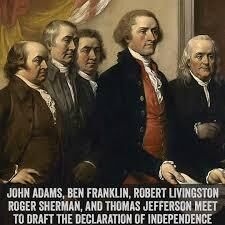 The Men on the Petition Committee
Jefferson took up residence on the third floor of a home owned by a Mr. Graff. He then penned the Declaration of Independence on his writing tablet. A rough draft was submitted to the committee on June 28th. Before doing so, Adams and Franklin were given the document, and their suggestions were incorporated. Livingston, a Columbia-educated lawyer, contributed his legal expertise and regional perspective to the document. In total, more than 80 drafts of the Declaration were made.
The adoption of the Resolution of Independence took place on July 2, 1776. New York abstained from the voting. Their Provincial Legislature had not approved the vote for independence. The delegates would have to wait until they were authorized to do so. With the Declaration becoming the order of business on July 3, Congress began making changes to the document, including deleting the passage on the slave trade. On July 4th, the Declaration was endorsed and signed. The President of the Congress, John Hancock, and Secretary Charles Thompson signed the Declaration.
Once the Declaration was signed, Charles Dunlap printed copies. The copy was attached to the Rough Journal of Congress, becoming the first official copy.
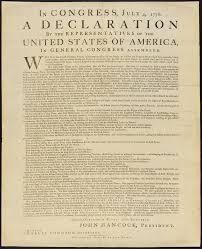 Dunlap BroadsideSince New York abstained for 9 days, the Declaration could not be called the “Unanimous Declaration by the Representatives of the United States General Congress.” Instead, it was titled “A Declaration by the Representatives of the United States General Congress.” On July 9th, the New York Provincial Congress met in White Plains and endorsed independence.
New York was in a unique position during this time. Although they understood that the colonies were moving towards independence, they were also economically tied to Great Britain. Like most colonies, they were politically divided and faced the possibility of British retaliation. The British were already preparing to target New York. Independence from Great Britain wasn’t an easy decision.
After receiving New York’s vote, the Declaration was printed on parchment by Timothy Matlack of Philadelphia. This printing of the Declaration was signed on August 2. Some of the men who had voted in July were not available to sign the document in August. Others, who were not in attendance in July, did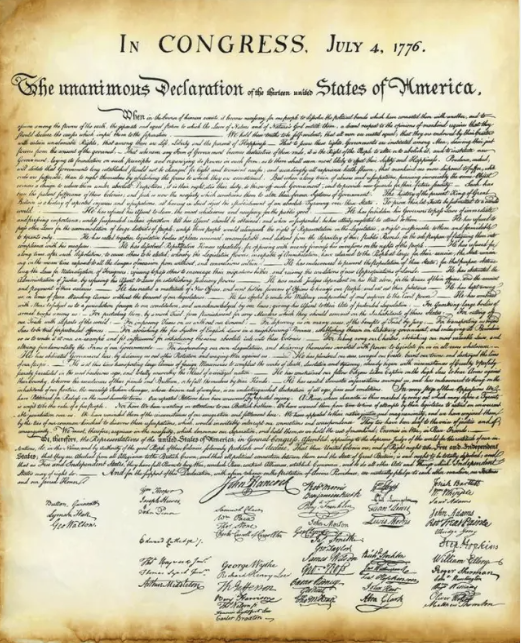 Declaration of Independence sign their names. An authenticated copy of the Declaration, bearing the signatures of those who voted for independence, was sent to each state in January of 1777. John Hancock’s and Charles Thompson’s signatures were the only actual ones on the copy. The rest were printed. The only name not on the Declaration was Thomas McKean. He did not have a chance to sign it until later. Livingston had missed the official signing of the document in August of 1776. He was called back to New York on urgent business.
Next month will be the last article in the New York Revolution series. You will find out what New York's reaction was upon hearing the Declaration read for the first time.