
Standing Up!
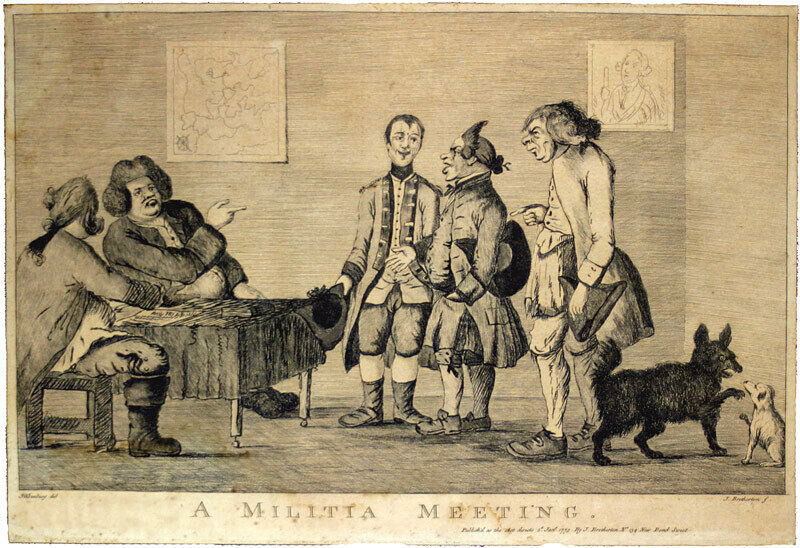 Committees of CorrespondenceIn 1772, Samuel Adams called for Committees of Correspondence to write and inform the other colonies of Boston’s position. They were to outline the colonists’ rights and the infringement of those rights by Parliament. These committees helped to organize the resistance throughout the colonies.
On December 16, 1773, the Boston Tea Party occurred. 342 chests of tea were thrown overboard into Boston Harbor from a ship belonging to the British East India Company. It was a political protest against the Tea Tax that Parliament levied upon the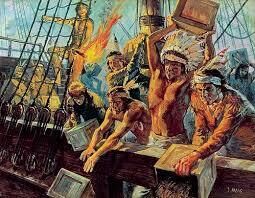 Boston Tea Party colonists and the perceived notion that the East India Company had a monopoly on the tea trade. The Colonists were also angry about not being represented in Parliament, so it was also a protest against “Taxation without Representation.” This was one of the first acts of defiance by the colonists and started them on the road to independence.
After the Boston Tea Party, Parliament responded quickly. In 1774, Parliament passed the Coercive Acts, which are also known as the Intolerable Acts. These consisted of four acts:
- The Boston Port Act, March 25, 1774 – This banned the loading and unloading of any ships in Boston Harbor.
- The Massachusetts Government Act, May 20, 1774 – This act restructured the Massachusetts government by abolishing its charter that was in place since 1691. By doing so, Massachusetts became a Crown Colony, giving all power to an appointed official, the Royal Military Governor, Thomas Gage, who was now under the Crown’s control.
- Administration of Justice Act, May 20, 1774 – This act gave the Governor the right to move a trial to another Colony or Great Britain. This took away the right to a fair trial by your peers, a right guaranteed by the Magna Carta.
- The Quartering Act, June 2, 1774 - This was the only Act to apply to all of the Colonies. Soldiers needed to be billeted close to the areas in which they operated. Soldiers were to be housed in “uninhabited houses, out-houses, barns, or other buildings,” yet they were to be quartered at the colonists’ expense.
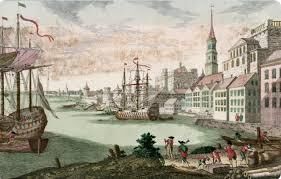 Boston Port Act
Although the Coercive Acts were meant to punish Massachusetts and send a warning to the other colonies, they had the opposite effect. The other colonies came to Massachusetts's defense. This was the first time that all of the colonies were unified. Unlike the previous acts, the Stamp and Townshend Acts, the Coercive Acts weren’t repealed. These policies actually were the spark that ignited the shift in public opinion and led to the Revolutionary War.