
Parliament Answers Back
By 1766, the Stamp Act was repealed, but the Declaratory Act was enacted, stating that Parliament could make laws binding on the American colonies "in all cases whatsoever." During this time, New York, the headquarters for British Troops, refused to assist troops. Scuffles broke out, and Parliament suspended the NY assembly’s power. New York finally paid for the troops, so the suspension wasn’t carried out.
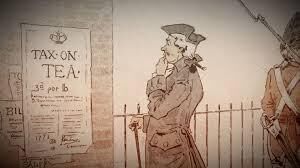 To help pay for governing the colonies, in 1767, Parliament enacted the Townshend Acts, which taxed glass, lead, paint, paper, and tea. Due to these taxes, the colonies tried to discourage the purchase of British goods.
During 1768-1769, colonists began to speak out against Parliament and the taxation of the colonies. Massachusetts called for a unified resistance of the colonies. Virginia wrote a formal letter to the King just before the Royal Governor dissolved its legislature.
In 1770, the Townshend Acts were repealed, except for the Tea Tax. Due to this repeal, colonists began to relax their boycott of English goods. In New York, a riot erupted between citizens and British soldiers because of the NY assembly's noncompliance with the Quartering Act. On March 5, citizens of Boston surrounded British soldiers and were fired upon. Five men died in what is now called the Boston Massacre. 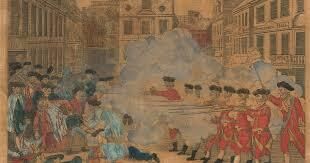 Boston Massacre