
The Ramifications of a War
The French Indian War ended in 1763. The Proclamation of 1763, a boundary line in the Appalachian Mountains, barred the colonists from settling on those Western lands won from the French in the French Indian War. Parliament thought that settling the Western lands could cause violence from Native Americans, as well as French settlers. The British also thought that if Western lands were settled and farmed, it could cause the Colonists to farm the land,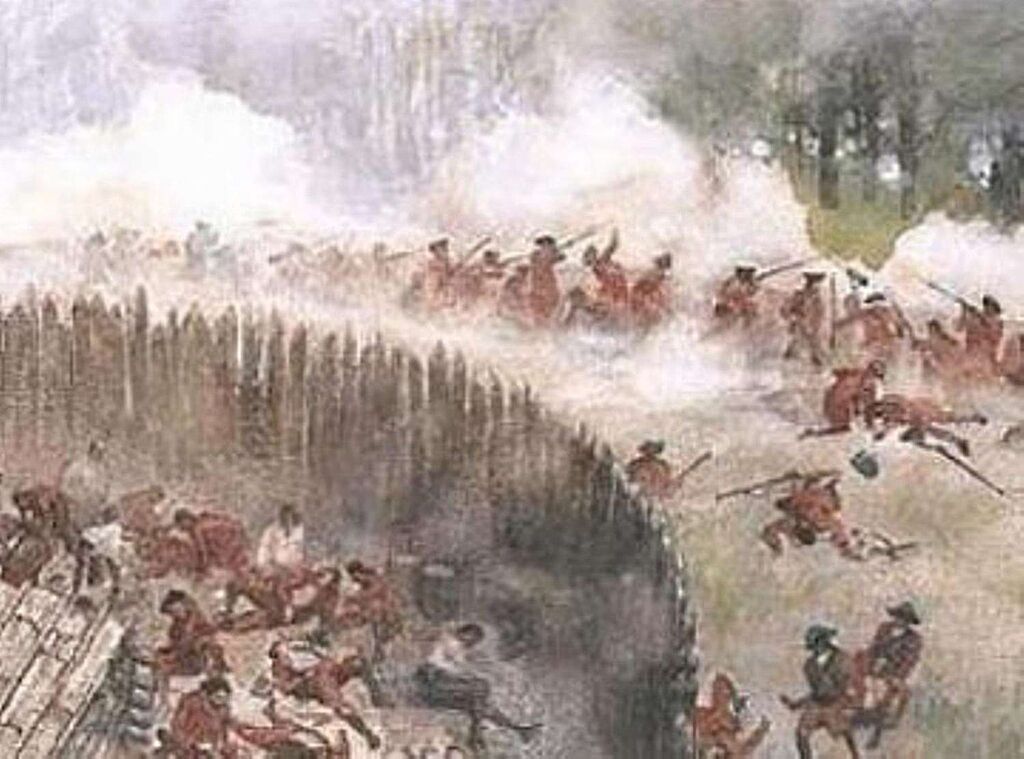 Fort Necessity thus leading the colonies to economic independence. Colonists who were eager to do so, settled the Western lands anyway without any interference from the government. A confederacy of Native people viewed this encroachment as a threat to their culture and political autonomy.
Starting in 1764, Parliament began to tax the colonies to decrease the debt they accrued from their war with the French. The first acts passed were the Sugar Act, which increased duties on non-English goods and the Currency Act, which prohibited the colonies 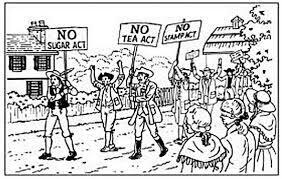 Protesting Taxesfrom issuing their own currency. This brought protests in Massachusetts and the cry of, “No Taxation without Representation,” since colonists weren’t represented in Parliament. This was also the start of the colonists’ refusal to use British goods.
1765 brought about the Stamp Act and the first Quartering Act. The Stamp Act was a tax on newspapers, almanacs, pamphlets, broadsides (posters), legal documents, dice, and playing cards. The Quartering Act required the colonies to provide housing in the form of barracks and supplies for British soldiers. These Acts brought about protests, as well as the formation of the group,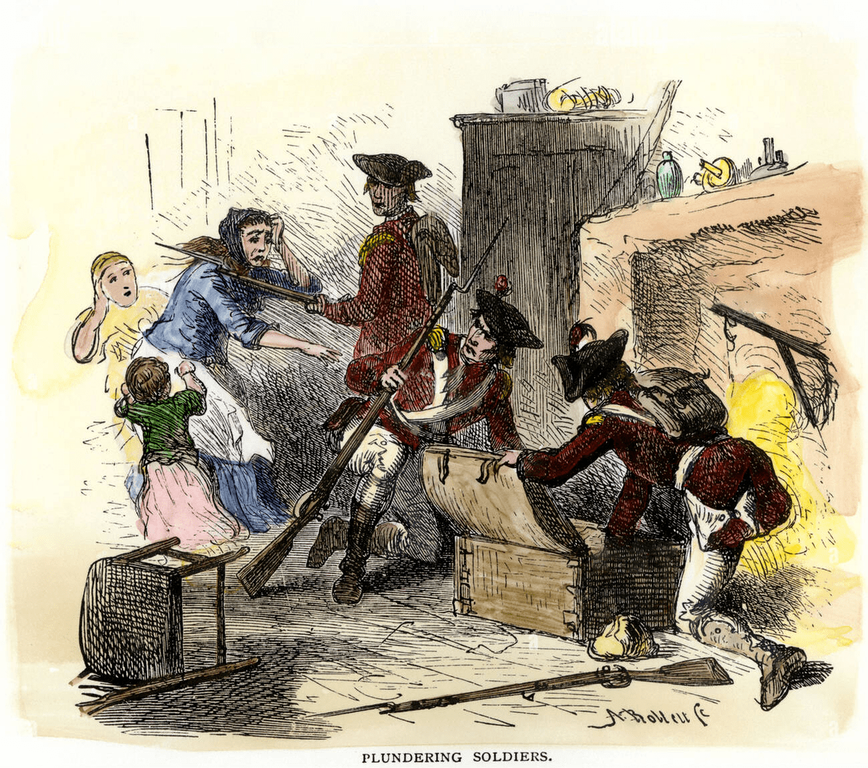 British Soldiers Entering a Home “The Sons of Liberty.” John Dickinson, a delegate from Delaware/Pennsylvania, wrote about the Stamp Act in his Letters from a Farmer in Pennsylvania. Dickinson felt that “the levying of money to raise revenue is avowed and exerted.” It appeared unconstitutional to him. Parliament was making the colonists pay for “defending, protecting, and securing the conquered provinces of Canada and Florida, and the British garrisons of Nova Scotia.” None of these were conquered for the colonies, nor did they benefit them. John Dickinson thought that it was an injustice to pay for these places.
The Stamp Act Congress passed a declaration of “Rights and Grievances” claiming that the colonists had the same rights as British citizens and therefore could not be taxed without representation in Parliament.