
 Introduction
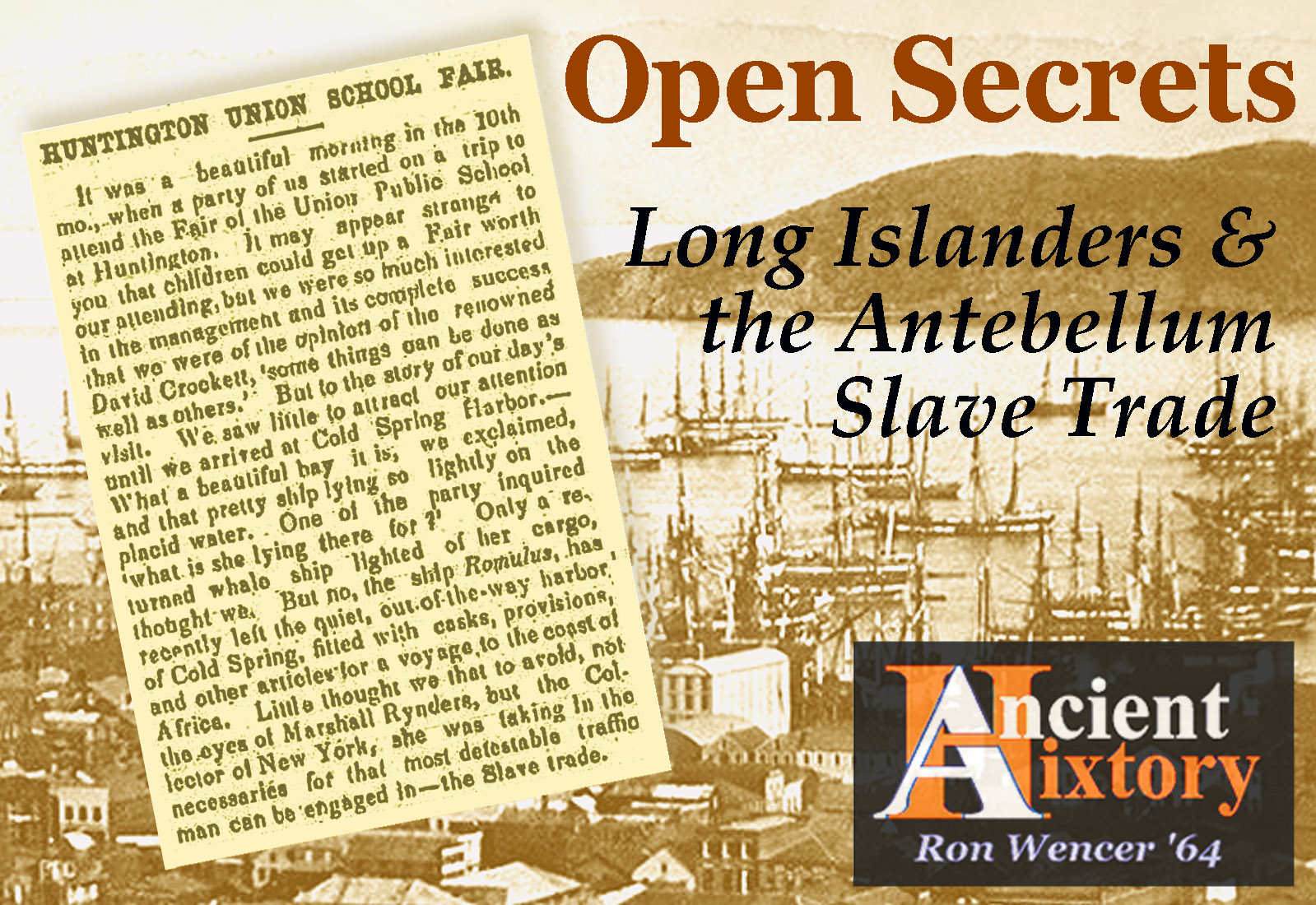
In January 1861, as winter set in, a writer at the Huntington Long-Islander newspaper looked back a few months, to an autumn day when a few friends strolled to a school fair. At Cold Spring Harbor, they were struck by the beauty of the bay, and by a “pretty” sailing ship that lay at anchor. Then the tableau was spoiled; they learned that the old whaler was taking on supplies for the slave trade.
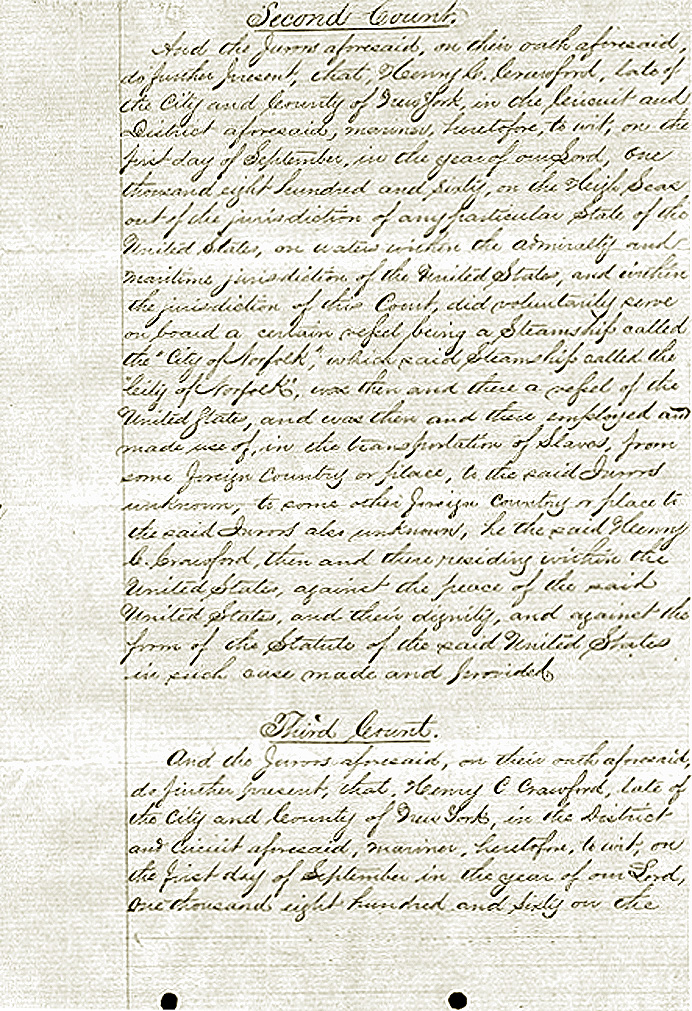 They probably didn’t know that several miles down the road in Hicksville, troubling news was brewing about another ship, the freighter “City of Norfolk.” Some months earlier, it had recruited seamen in Lower Manhattan for a cargo run to Europe, but well into its voyage, the Captain (Henry C. Crawford, reportedly a resident of Hicksville) revealed to them that the ship was a slaver, bound for Africa. The sailors had been coerced into seeing the voyage through, but now they were back in New York, and preparing to testify in Federal court against him. The newspapers would report that Crawford had made “fabulous sums in slave traffic.”
Although slavery itself was still legal in some parts of the nation, trafficking new slaves anywhere in the world was considered piracy by the United States, and it could earn an American a death sentence. Rather than risk a trial, Henry Crawford would plead guilty. Part of his indictment is shown here.