
 Rejecting the Slave Trade (or Not)
Slavery had been part of Long Island from the earliest years of European settlement. The Dutch held slave auctions in Nieuw Amsterdam; some of the early Quaker settlers in Jericho kept slaves. After 1800, however, most Europeans and Americans thought the African slave trade inhumane and repugnant, and pressed their respective governments to end it. But even in the North, there were those who favored the continuation of slavery throughout the nation. In 1846, the very patriotic Long Island Farmer printed an article that asked its readers to imagine how their ancestors would have reacted to abolition: “I have no right to my negroes that I bought with my own money? We’ll see about that!” It went on to say that, unlike contemporary freed northern slaves, the old slaves “were no fools, and so stuck to their old masters, whom they had taken for better or for worse….” Evidently, the author had difficulty distinguishing between wives and slaves.
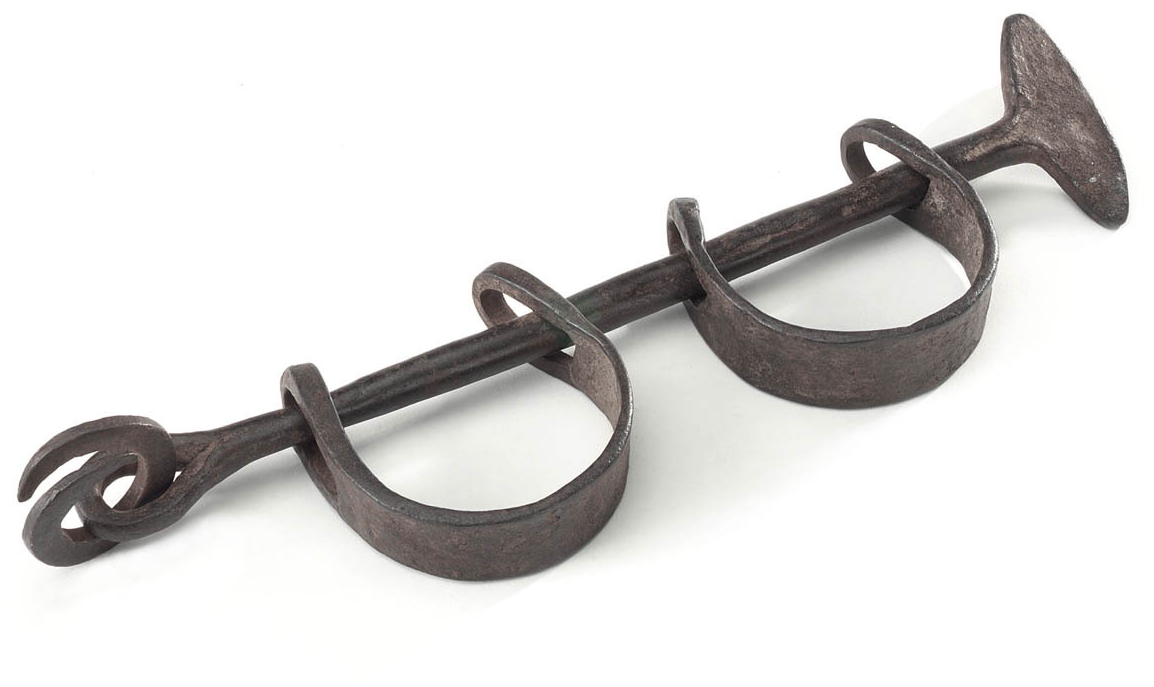
Others involved in the slave trade were less philosophical; they simply chose to profit from it. Harbor masters and sheriff’s deputies accepted bribes to ignore illegal activities. Sailors sailed on slave ships. Shipyards rebuilt whaling ships or freighters into slavers. Blacksmiths made things like leg irons to keep slaves in place on ships.