
 Wendy Elkis
Class of 1977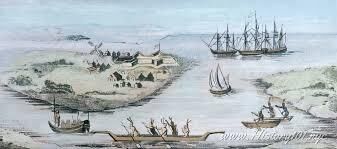 New York Harbor 1600From the beginning, New York was a popular port city. The harbor was used as a main port dating back to the 1600s. At that time, trade was centered around bartering for furs. Around 1625, the Dutch West India Company established themselves at the harbor in what was then known as New Amsterdam. It was such a popular port that by the 1650s, you could find people from around theworld, and you could hear approximately 18 different languages. Commerce kept growing year after year, regardless of who was in control of the area.
New York's Beginning
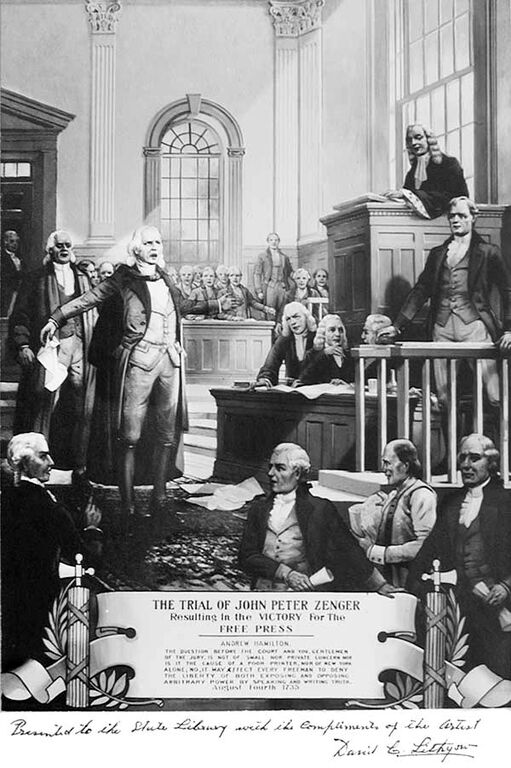 Crown v Zenger trial illustration New York was a cosmopolitan city and a strategic trading post. The city was known for its freedom of worship, and due to the libel trial of Peter Zenger, it was the cornerstone of the principle of freedom of the press. New York was even the base of operations during the French and Indian War.
After the French and Indian War, there was privateering and the slave trade vessels operating out of the harbor. The British imposed taxes on the colonists. Those taxes imposed by Parliament led to the rise of the Sons of Liberty. By 1775, the Sons of Liberty were harassing the Loyalists and planning to raid the Turtle Bay Depot. On July 20th, the Sons of Liberty conducted their raid, which gained them much-needed weaponry and supplies for taking action against the British. 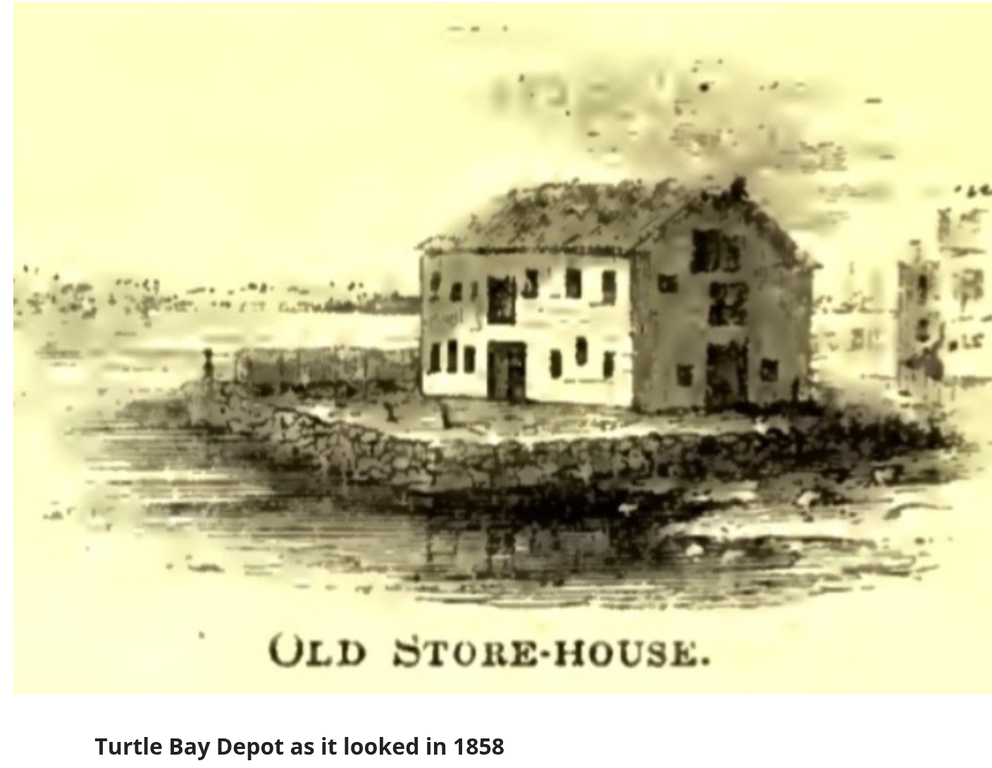
The British are Coming
Before Lexington and Concord, the population of New York was approximately 25,000 people. Once word of Lexington and Concord reached New York, people started to fear that what happened to Boston would now happen to New York. This led to a major exodus from New York. One-third of New York's population had left by September of 1775. By July 1776, the population had dropped to approximately 5,000. Those who stayed faced dangerous conditions.
By that summer, New York was preparing for a British attack. George Washington was training his army and trying to whip them into shape, and by April of 1776, he arrived in New York from Cambridge, Massachusetts, and started preparing to defend the city against British forces, especially those that would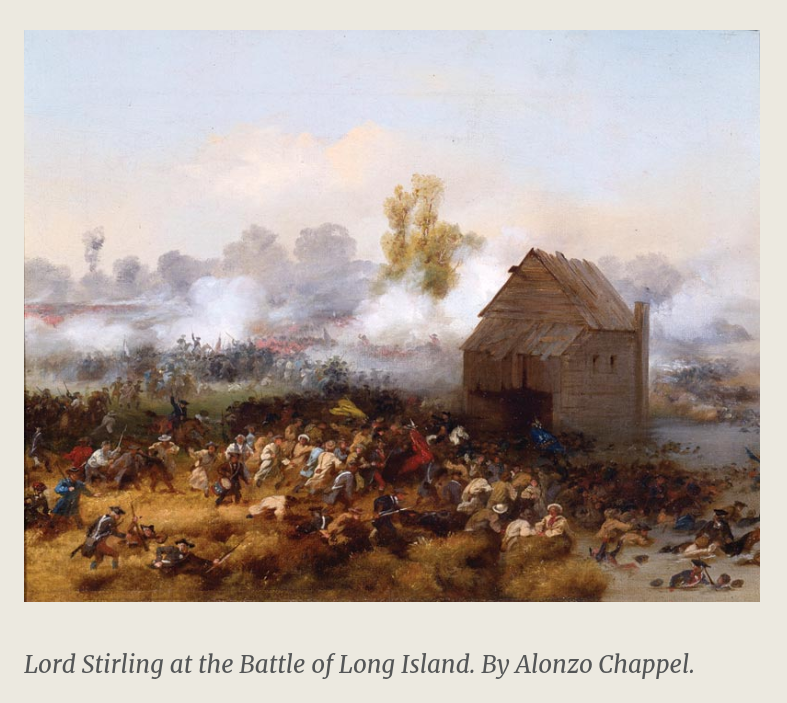 arrive by sea. The New York campaign began with the arrival of General Howe and the British troops in late June/Early July. By August, the Battle of Long Island began, and by September, George Washington had retreated.
Next Month- The first discussions of Independence at the Second Continental Congress
Resources
https://www.newyorkalmanack.com/2025/04/new-york-harbor-maritime-history/
https://en.wikipedia.org/wiki/History_of_New_York_City_
https://history.nycourts.gov/case/crown-v-zenger/
https://wams.nyhistory.org/primary-source/fear-and-danger-in-ny/
https://avalon.law.yale.edu/18th_century/assoc_sons_ny_1773.asp
https://www.mountvernon.org/library/digitalhistory/digital-encyclopedia/article/new-york-campaign
Illustrations
Zenger Trial https://history.nycourts.gov/case/crown-v-zenger/
Turtle Bay Depot - https://revolutionarywarjournal.com/capture-of-turtle-bay-depot-by-sons-of-liberty/#:
New York Harbor 1600s- https://share.google/yayeM3iTU1fIaXBg8
New York Campaign - blob:chrome-untrusted://media-app/98ddef69-17a7-4521-afb4-28429f8f7263