

Did you know that Long Island wasn’t always the bustling suburbia that it is today? The ‘Great Plains’ of Long Island once covered over 50 thousand acres of land with tall grasses and many endangered species, from Garden City to Levittown, to East Meadow, and even Hicksville! This land was the home to many rare, Long Island native species, such as the beautiful Sandplain Gerardia flowers flouting their bright pink petals, and the elusive Frosted Elfin butterflies. Unfortunately, most of the ‘Great Plains’ has shrunken over time, with the Hempstead Plains Preserve remaining as one of the only places on the island where you can still experience the plain's beauty. This property, managed by the Friends of Hempstead Plains, is the largest remaining area of the ‘Great Plains’ on Long Island, and is located directly next to Nassau Community College.
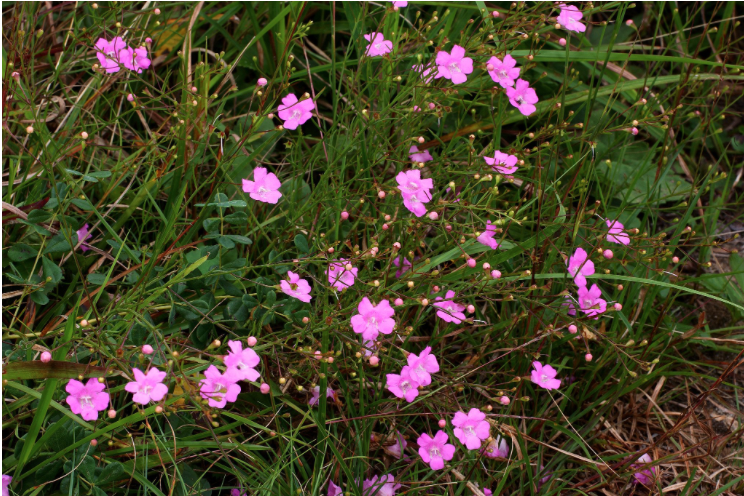 Blooming of the endangered Sandplain Gerardia at Hempstead Plains Preserve. (Friends of Hempstead Plains)
Sadly, many of the varying species of plants and animals that once resided within the ‘Great Plains’ are no longer around. The most prominent example of species that have gone extinct is the Heath Hen, scientifically known as Tympanuchus Cupido Cupido. Similarly to the famous story of the Dodo bird's extinction, it is said that the Heath Hen was a rather naive species of bird, leading to its demise. In fact, some accounts even state that the Heath Hen was so unaware of the danger of human hunters that a single hunter could kill an entire flock in the Great Plains in a single day. Another important factor leading to the Heath Hen's extinction was the development of railroad systems across the Great Plains, which was in part influenced by Valentine Hicks, a prominent member of Hicksville’s local history who had established the same station stop in the hamlet today. Unfortunately for the Heath Hen, it could not keep up with the rapid expansion occurring across Long Island, leading to its official mark of extinction in 1932.
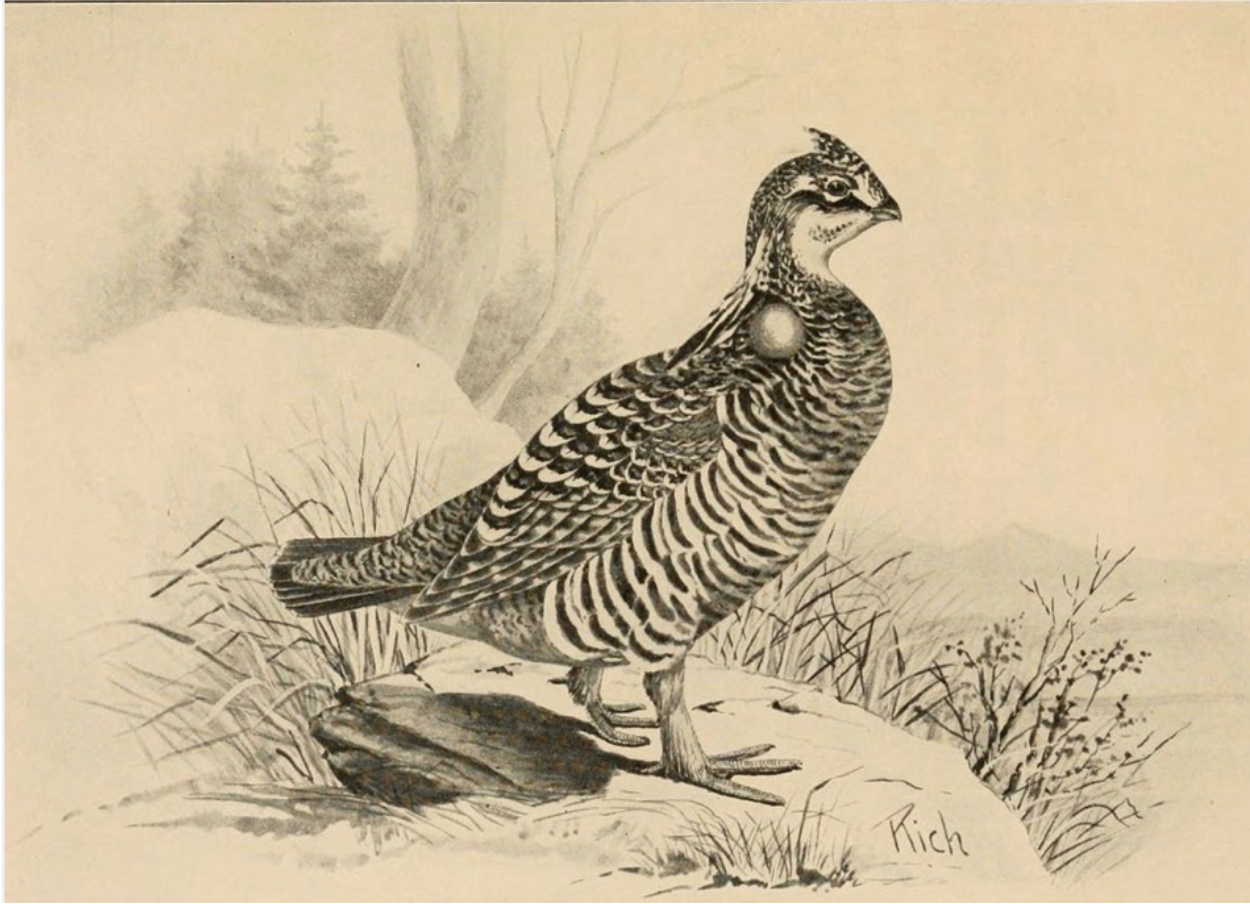 Illustration of the Heath Hen. Credit: Walter Herbert Rich in Feathered Game of the Northeast, 1907
Thankfully, some species have managed to all but barely survive the effects of the railroad expansion across the Hempstead Plains, allowing us to have some insight on how our communities truly looked in their past. As previously mentioned, the Frosted Elfin butterfly is one of these species to endure the dangers of industrialization, and can still be found in small numbers across Long Island’s Great Plains. These butterflies are primarily gray or brown in color, and can be found in sizes of 1 inch to 1.25 inches. It is not a species of butterfly that migrates, and relies on either lupine or wild indigo as a food source. Another distinctive characteristic of the Frosted Elfin butterfly is its white hairs, which cover the entirety of its body. Currently, this species of butterfly is listed as State Conservation Rank S1S2 by the New York National Heritage Program, or NYNHP. In short, this means that the Frostin Elfin butterfly is very vulnerable to extinction, and that there are likely only 20 or less remaining populations across the state. The NYNHP has also documented that "Prescribed burns should be timed to avoid time periods when egg and larvae are present.” This is important to take note of, as prescribed burns do occur at the Hempstead Plains as recently as within the past year. It is vital that more research is conducted on the endangered Frosted Elfin butterfly population within the Great Plains in order to judge the effects of prescribed burns on the remaining inhabitants. Conducting more research on the area can also help provide more outreach to the local communities on how to help protect areas such as the Great Plains, and ensure that future generations will still be able to appreciate the species that have lived on Long Island for generations alongside us all.
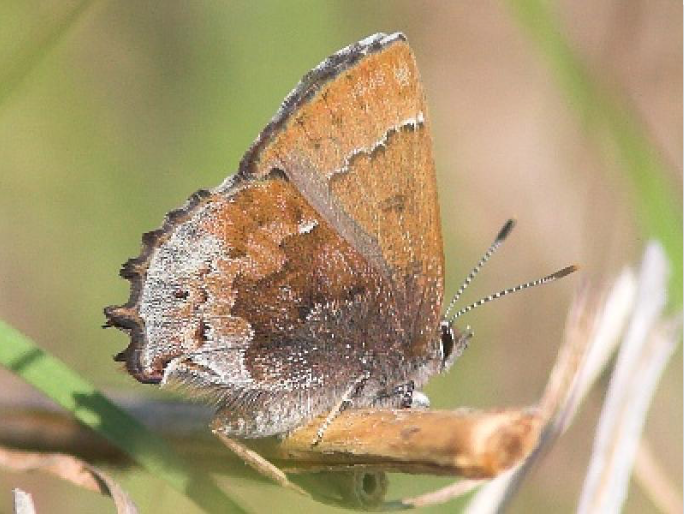 Photograph of the Frosted Elfin Butterfly. Credit: Steve Walter, NYNHP
As a community, it is vital that we keep Long Island’s natural landscape intact. The remaining Great Plains are currently under the preservation management of the Friends of Hempstead Plains, whose goal is to protect the wildlife and educate the community on its history and environmental importance. The Friends of Hempstead Plains also practices multiple scientific studies within the Great Plains, working alongside local colleges to “collect and analyze key scientific data”, according to the group's statement on their public website. Currently, the Friends of Hempstead Plains is actively accepting students from local schools to visit the Hempstead Plains for field trips in order to help contribute to our youth's education. They are also currently accepting volunteer work, which includes individual tasks, team-focused work alongside other volunteers, and “Drop-in Events” as stated within the group's website. Without organizations like the Friends of Hempstead Plains, we likely would have more apartment complexes and roadways rather than the beautiful preserves being protected today.
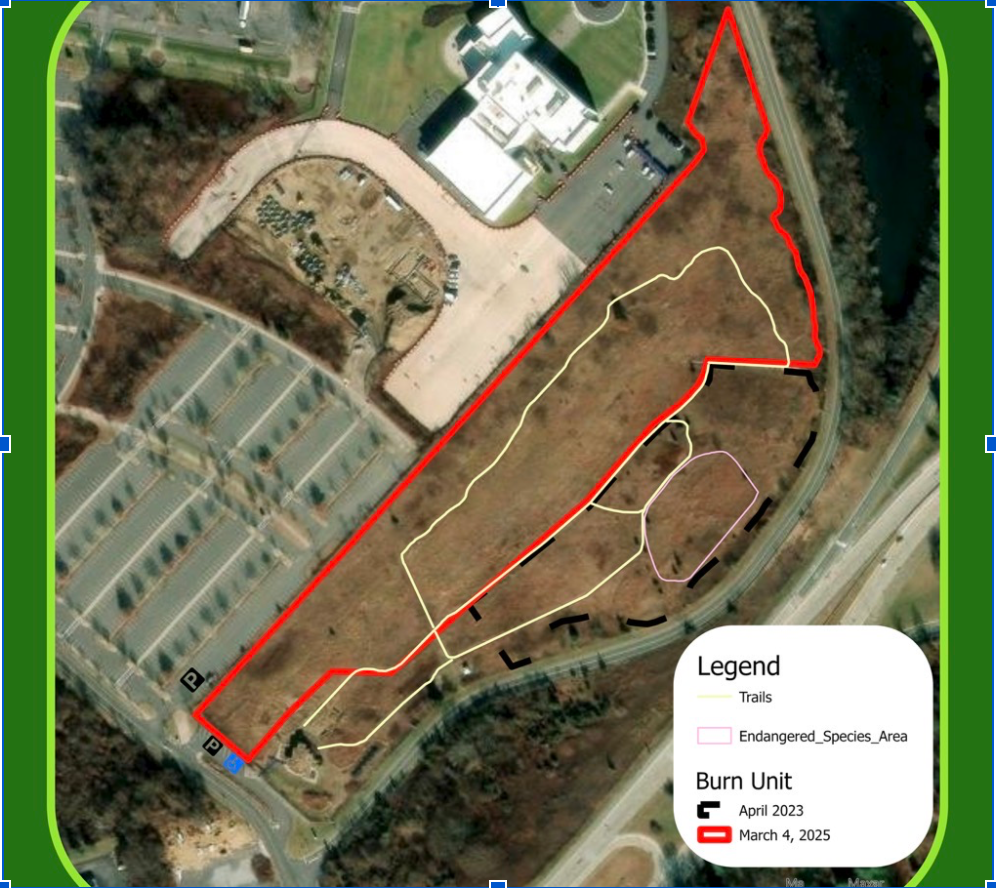 Trail map of the Hempstead Plains Preserve, Courtesy of the Friends of Hempstead Plains.