
Many of us have probably passed the brown brick buildings and tall smoke stacks on S. Broadway while on the way to the gym, or to grab a bite to eat at McDonald’s. However, few understand these buildings' history and impact on our community. In 1936, Grumman and the US Navy would go on to create these facilities for different testing and research applications of aerospace technology. Throughout World War II and the Korean War, these facilities would create pivotal aircraft such as the Hellcat, Tigercat, and Albatross. Over 17,000 aircraft were produced by Grumman in Bethpage, making it a key facility for the military. These aircraft were vital in supporting US ground forces in both wars, objectively strengthening the power of our military tenfold and giving us true “air superiority”. The Bethpage Grumman facilities were also the creators of the Apollo Lunar Module, which would go on to complete the Apollo 11 Space Mission on July 20th, 1969. While it is said that this location would only house roughly 800 workers prior to the kickoff of WWII, by the peak of the war, this facility would reach upwards of 25,000 employees, leading to a major influx of jobs in the local community. In fact, the Apollo Lunar Module project required 9,000 employees alone! However, many would soon come to realize that the Grumman facilities were undeniably destroying the Island around them.
 F6F Hellcat’s lined up at Grumman, Bethpage. Circa 1945. (Caseda Frazco, Fans of Allied Warplanes of WWII Facebook Group)
The first signs of these negative impacts appeared not long after Grumman’s introduction to Long Island in the 1940’s. By then, the construction of planes such as the Hellcat had led to the contamination of wells on their property, which had tested positive for Chromium in 1949. While one form is known to be rather harmless to people, Chromium-6 has been known to be a rather toxic carcinogen if ingested or inhaled. Later, in 1986, a Nassau County Department of Health and US Geological Survey study showed that contaminants from the Grumman and Naval facilities were sinking into the ground and spreading across the Bethpage area. Again in 2009, a more contaminated deposit was found in the Bethpage Community Park area. In 2017, the news would only worsen, as radium was found in groundwater samples at multiple Bethpage schools, and a released document showed that Grumman had used radium, tritium, polonium, uranium, and more radioactive materials during their stay on Long Island. Side effects of such materials include gastrointestinal distress, anemia, and an increased risk of cancer, clearly putting the people in the surrounding area at extreme risk in their own homes.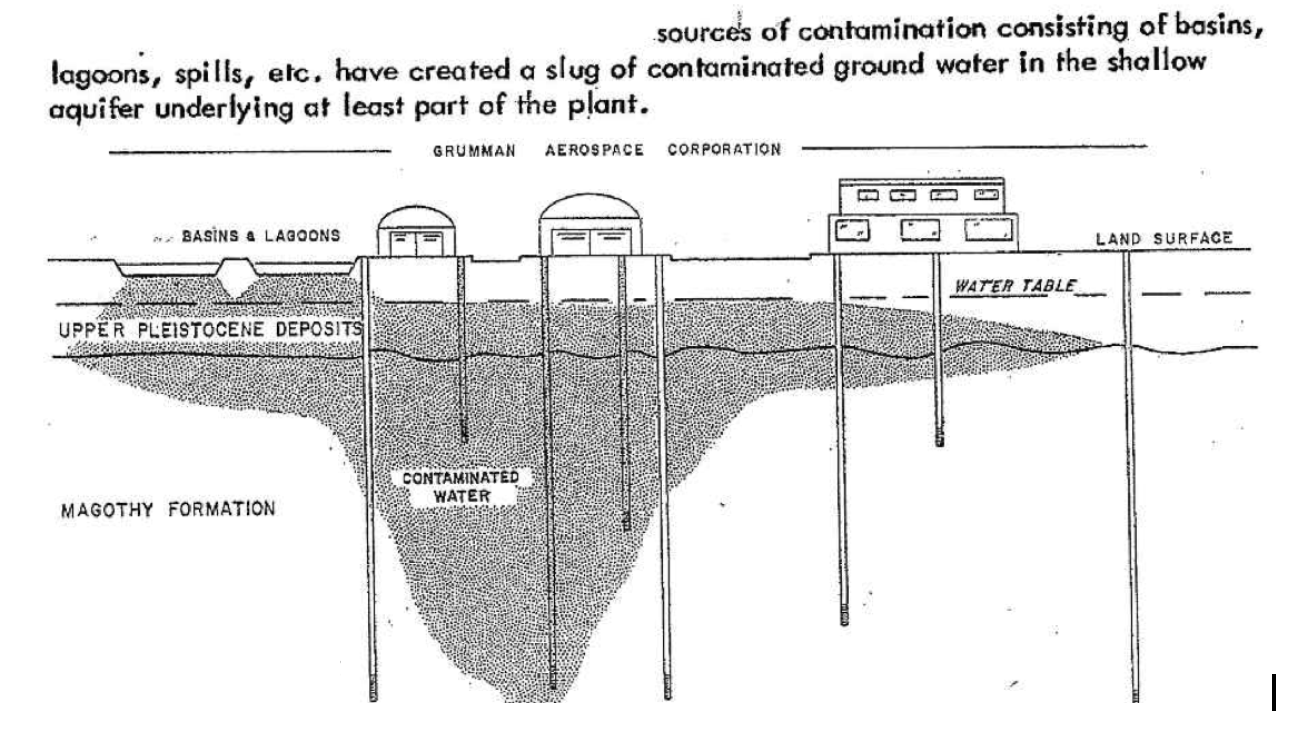 Released Memo From Grumman Consultant to Company, 1976. Courtesy of Newsday
Unfortunately, this is still not the end of Grumman’s tide being cast over the local Long Island community. As recently as 2024, chemical drums illegally dumped and buried by Grumman were found underneath the Bethpage skatepark. What was once a safe haven for many locals to enjoy their favorite sport, mingle with friends, and appreciate the warmer days has now become a burial ground of a much darker past. Now, many speculate that the local government knew about these illegal dumping grounds, yet still decided to build the skatepark and ignore the fact that cleanup had not been completed, according to HAZEL HOUSE’s 2025 YouTube video titled Toxic Waste and the Bethpage Skatepark Story. The Bethpage skatepark is still torn up to remove all dangerous contaminants, yet many local skateboarders are upset about the slow progress and possible underlying health issues caused by this catastrophe. It makes one wonder whether the Grumman facility was a protector of Long Islanders by creating technology that helped us win major wars, or an antagonist that used our land for its own gain while destroying what we call home. 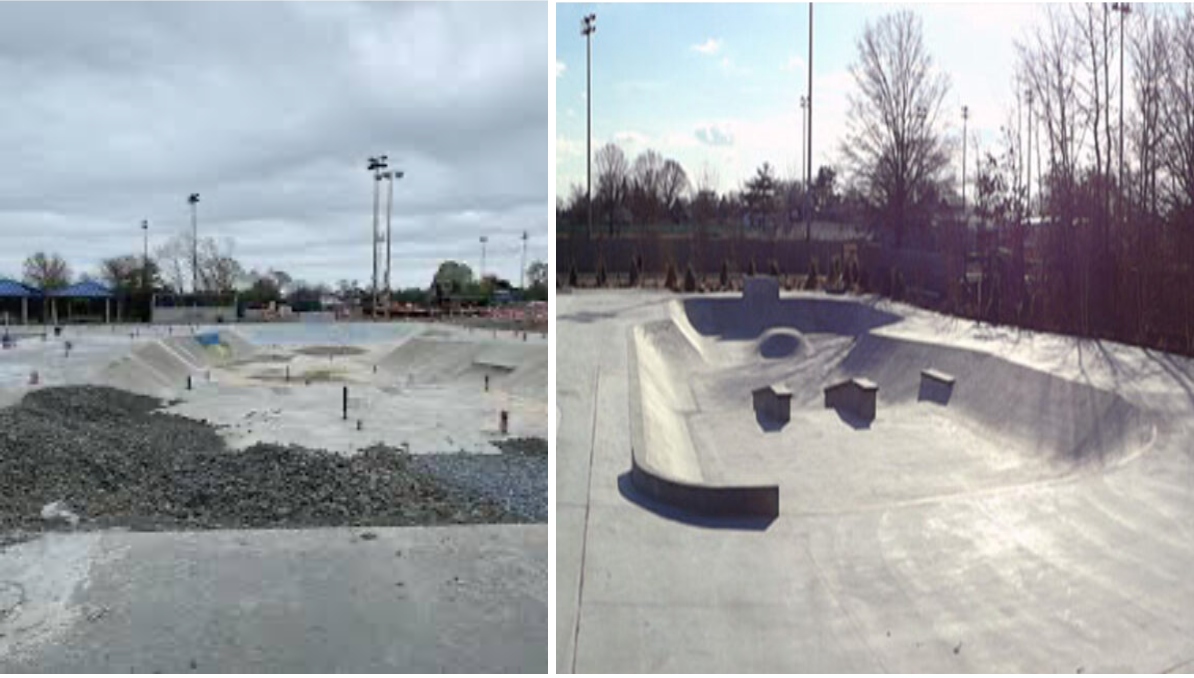 Bethpage Skatepark's current state, with side-by-side comparison of the park prior to the discovery of contaminants